What is Form 1583? ⸺ An Overview
Form 1583, a USPS document, facilitates removal from mailing lists; it’s crucial for addressing unwanted solicitations and managing personal postal preferences effectively.
This form, often accessed as a PDF, allows individuals to declare residential or personal use of a Post Office box, impacting direct mail delivery.
Purpose of the Form
Form 1583 serves a vital purpose: to enable individuals to actively manage and reduce the amount of unsolicited mail they receive. Specifically, it’s designed to help those utilizing Post Office (PO) Boxes to clearly designate whether the box is for residential or personal use, or for commercial purposes.
This distinction is critical because it impacts how marketers and mailing list providers utilize the address. By completing and submitting Form 1583 (PDF), individuals signal their preference to opt-out of certain marketing mailings directed towards businesses. It’s a key component in connecting with the DMA Mail Preference Service, aiding in the removal of one’s name from numerous national mailing lists.
Essentially, the form acts as a formal declaration to the USPS and direct marketing industries, asserting a desire for reduced junk mail and greater control over personal postal communications. It’s a proactive step towards minimizing unwanted solicitations.
Who Needs to Complete Form 1583?
Generally, anyone renting a Post Office (PO) Box and intending to use it for receiving personal or residential mail needs to complete Form 1583 (PDF). This includes individuals who wish to separate their personal mail from business-related correspondence delivered to the same PO Box.
Specifically, if you want to reduce the amount of unsolicited advertising and marketing materials sent to your PO Box, completing this form is essential. It’s particularly relevant for those who find themselves overwhelmed by junk mail and desire a more controlled postal experience.
Multiple adults sharing a single PO Box require each individual to submit a separate Form 1583. Failing to do so may result in continued unwanted mailings. The form ensures accurate designation of mail preferences for each resident utilizing the box.
Where to Obtain the Form (PDF Version)
The official Form 1583 (PDF) is readily accessible through the United States Postal Service (USPS) website. A direct search on the USPS site using “Form 1583” will quickly lead you to the downloadable document. It’s crucial to ensure you are downloading the form directly from the USPS to guarantee authenticity and the most current version.
Alternatively, you can often find a copy of the Form 1583 PDF through a general internet search, but always verify the source is the official USPS website to avoid potential security risks or outdated forms. Many third-party websites offer the form, but reliability can vary.
Physical copies of Form 1583 may be available at your local Post Office, though downloading and printing the PDF version is generally the most convenient method.
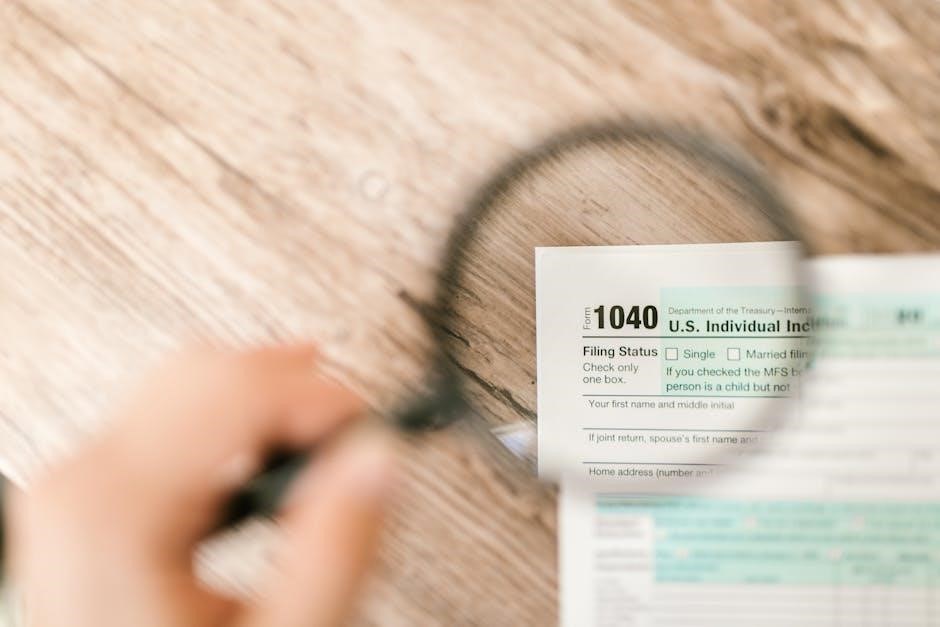
Understanding the Sections of Form 1583
Form 1583 contains sections for recipient details, postal service use, address verification, and a crucial declaration regarding residential or personal use of the PMB.
Section 1: Recipient Information
Section 1 of Form 1583 meticulously gathers essential details about the individual requesting mail list removal. This includes the complete name, as it should appear on mail pieces, ensuring accurate identification for processing requests.
A full and accurate mailing address is paramount, demanding consistency with documentation provided – typically item 9b on the form itself. This section also requires providing a detailed address, encompassing street number, street name, apartment number (if applicable), city, state, and the complete ZIP code.
Providing this information correctly is vital; discrepancies can lead to processing delays or outright rejection of the form. The recipient’s signature is also required, legally validating the request and confirming the provided details are truthful and accurate. This section forms the foundation for initiating the mail preference process.
Section 2: Postal Service Use Only
Section 2 of Form 1583 is explicitly designated for internal USPS (United States Postal Service) processing and is strictly “Postal Service Use Only.” This area is not to be completed by the individual submitting the form. It’s reserved for postal employees to record crucial tracking and handling information throughout the mail preference request lifecycle.
Typically, this section includes fields for date stamping upon receipt, internal routing codes to direct the form to the appropriate processing center, and notations regarding the form’s status – whether it’s been accepted, requires further review, or has been fully processed.
Postal workers may also use this section to document any issues encountered during processing, such as illegible handwriting or incomplete information. This ensures accountability and facilitates efficient handling of each Form 1583 submitted.
Section 3: Residential/Personal Use Declaration
Section 3 of Form 1583 is the core of the document, requiring a clear declaration of whether the Post Office (PO) box is used for residential or personal purposes. This distinction is vital as it impacts eligibility for mail preference services. Individuals utilizing a PO box solely for business purposes are generally ineligible for complete mailing list removal via this form.
Completing this section accurately is crucial. You must indicate if the box receives mail addressed to current residents, or if it’s used for personal correspondence. Multiple declarations may be needed if several adults share the PO box, requiring a separate Form 1583 for each individual.
Incorrect declarations can lead to processing delays or rejection of the form, hindering your efforts to reduce unwanted mail. Careful attention to detail in this section is paramount.
Section 4: Address Verification
Section 4 of Form 1583, available as a PDF, focuses on verifying the address associated with the PO box. This section demands meticulous accuracy, as discrepancies can invalidate your request for mailing list removal. The address provided must precisely match the documentation submitted as proof of identity and address – typically a driver’s license or utility bill.
The USPS requires this verification to prevent fraudulent requests and ensure the form applies to the correct individual and location. Any mismatch, even a minor one, could result in the form being returned or rejected.
Pay close attention to details like apartment numbers, street names, and zip codes. Double-check all entries before submission. Providing accurate address information is fundamental to the successful processing of your Form 1583.

Completing Form 1583 ⸺ A Step-by-Step Guide
Form 1583 (PDF) completion involves downloading, accurately inputting personal details, verifying your address, and declaring residential use—a straightforward process for mail preference control.
Step 1: Downloading and Opening the PDF
Initiating the process requires obtaining the official Form 1583 PDF from the United States Postal Service (USPS) website. A quick online search for “USPS Form 1583 PDF” will directly lead you to the downloadable document. Ensure you are downloading from a legitimate USPS source to avoid potential security risks or outdated versions.
Once downloaded, locate the file on your computer or device. Opening the PDF is typically achieved by double-clicking the file icon. This will launch the document in a PDF reader application, such as Adobe Acrobat Reader, which is often pre-installed on many computers, or a similar program. If you don’t have a PDF reader, you can download one for free from Adobe’s website or other reputable software providers.
Verify that the document displays correctly and is fully accessible before proceeding to the next step. A clear and functional PDF is essential for accurate completion and submission of the form.
Step 2: Filling Out Personal Information
Begin by carefully entering your personal details in the designated sections of the Form 1583 PDF. This typically includes your full name, as it appears on your mail, and any alternative names you’ve used. Accuracy is paramount; discrepancies can delay processing.
Provide your complete mailing address, ensuring it matches the address you wish to remove from mailing lists. The form may request previous addresses as well, particularly if you’ve recently moved. Double-check each entry for typos or omissions.
Complete all required fields, indicated by asterisks or specific instructions within the PDF. Some sections may ask for information regarding all adults using the Post Office Box (PMB), requiring a separate form for each individual. Ensure all information is legible and consistent throughout the document.
Step 3: Providing Accurate Address Details
Within the Form 1583 PDF, meticulously input your current mailing address. This section is critical; the address must precisely match the documentation you provide (item 9b on the form). Any mismatch will likely result in rejection.
Include all components of your address: street number, street name, apartment/unit number (if applicable), city, state, and ZIP code. Verify the ZIP+4 code for enhanced accuracy. If using a PMB, clearly indicate “PMB” followed by the box number.
Pay close attention to formatting. Ensure consistency with how your address appears on official mail. If you’ve recently moved, consider including your previous address to prevent continued mail delivery to the old location. Accurate address details are fundamental for successful mailing list removal.
Step 4: Declaring Residential/Personal Use
The Form 1583 PDF requires a clear declaration of whether the PMB (Private Mailbox) is used for residential or personal purposes. This distinction is vital for processing your request to reduce unwanted mail. Complete a separate form for each adult utilizing the PMB.
If the PMB serves as your primary residence, explicitly state this. If it’s used for business, do not complete this form; alternative procedures apply. Accurate declaration ensures the USPS correctly categorizes your mailbox.
Understand that declaring residential/personal use signals your intent to minimize commercial mailings. While not a guaranteed removal from all lists, it significantly reduces solicitations. Carefully review the instructions within the PDF to ensure proper completion of this crucial section.

Submitting Form 1583
Completed Form 1583 PDF submissions require mailing to the designated USPS address; ensure accurate postage and consider certified mail for proof of delivery.
Submission Methods
The primary method for submitting Form 1583 is via postal mail; currently, the USPS does not offer online or electronic submission options for this specific PDF form.
To ensure successful processing, physically mail the completed and signed form to the address specified on the form itself – this information is crucial for correct routing.
While not a direct submission method, scanning the completed Form 1583 PDF for your records is recommended. Consider utilizing certified mail with return receipt requested; this provides verifiable proof that the USPS received your document, offering peace of mind and a record for future reference should any issues arise regarding mailing list removals.
Remember, only a physically mailed form initiates the process of updating your mailing preferences with the USPS and associated direct marketing organizations.
Where to Send the Completed Form
Completed Form 1583 PDF documents should be mailed to the following address: Marketing Mail Preference Service, PMB #39, P.O. Box 54189, Prescott, AZ 86302. This is the central processing location for all submitted forms requesting removal from various mailing lists.
Double-check the address before sealing the envelope to avoid delays in processing. Ensure the address is clearly written and legible on the envelope itself. Sending it to an incorrect address will likely result in the form not being processed, defeating the purpose of submitting it.
No matter if you are submitting one Form 1583 PDF or multiple forms for household members, all should be sent to the same address. Utilizing a standard letter-sized envelope is recommended for efficient handling by the USPS.
Processing Time and Confirmation
Allow approximately 10-12 weeks for the Form 1583 PDF submission to be fully processed. It’s important to understand that this is an estimate, and actual processing times can vary depending on volume and unforeseen circumstances. Patience is key during this period.
Unfortunately, the USPS does not typically send a confirmation notice upon successful processing of Form 1583. The reduction in unwanted mail is the primary indicator that the form has been effective; Monitor your mail delivery after the estimated processing time to observe any changes.
If, after a reasonable period (e.g., 16 weeks), you continue to receive unwanted mail, consider resubmitting the Form 1583 PDF, ensuring all information is accurate and legible.

Form 1583 and Mailing List Removal
Form 1583 PDF connects to the DMA Mail Preference Service, aiding in reducing unwanted catalogs, solicitations, and promotional materials delivered to your address.
Utilizing this form is a proactive step towards controlling your mailbox and minimizing junk mail effectively.
DMA Mail Preference Service Connection
Form 1583, when submitted, directly influences your profile with the Data & Marketing Association (DMA) Mail Preference Service (MPS). This connection is pivotal for individuals seeking to curtail unsolicited mail. The PDF version of the form, once completed and mailed, signals your preference to marketers to remove your name and address from their mailing lists.
However, it’s important to understand the MPS isn’t a complete solution. It primarily impacts national mailing lists of companies adhering to DMA guidelines. Therefore, submitting Form 1583 doesn’t eliminate all junk mail, particularly local mail, or mail from organizations not affiliated with the DMA. The process takes approximately 10 weeks for changes to fully propagate through marketing databases. Effectiveness relies on marketers consistently updating their lists with the MPS data.
Despite these limitations, utilizing Form 1583 in conjunction with the DMA MPS remains a valuable strategy for reducing unwanted postal solicitations.
Removing Your Name from Mailing Lists
Successfully removing your name from mailing lists involves a multi-faceted approach, with Form 1583 (PDF) being a key component. Submitting the completed form to the USPS initiates a process that signals your intent to reduce unwanted mail. However, it’s crucial to understand this isn’t an instant fix.
Beyond Form 1583, directly contacting companies sending unwanted mail is effective. Many offer online opt-out options or provide addresses for written requests. Additionally, utilizing services that specialize in suppressing your information from marketing databases can further minimize solicitations. Remember, the PDF form primarily impacts DMA-compliant marketers.
Persistence is key; some companies may require multiple requests. Combining Form 1583 with proactive outreach offers the best chance of significantly reducing the volume of junk mail you receive, reclaiming your postal peace of mind.
Effectiveness of Form 1583 for Mail Reduction
The effectiveness of Form 1583 (PDF) in reducing unwanted mail is moderate, primarily impacting marketers adhering to Direct Marketing Association (DMA) guidelines. It’s not a universal solution, as some companies operate independently of these standards. Submitting the form signals your preference for reduced solicitations, but doesn’t guarantee complete cessation.
The PDF form is most effective for catalogs, promotional offers, and similar mass mailings. Official government correspondence and essential communications will likely continue. Consistent use, coupled with direct contact to unwanted senders, maximizes its impact.
Expect a gradual decrease in mail volume over several months. While Form 1583 is a valuable tool, a comprehensive approach – including DMA opt-outs and direct requests – yields the most substantial and lasting results in controlling your mailbox.

Troubleshooting Common Issues
Form 1583 (PDF) issues include incorrect information, rejection due to address mismatches, or delayed processing; resubmission with accurate details is often required for resolution.
Incorrect Information on the Form
Submitting a Form 1583 (PDF) with inaccurate details is a frequent cause of processing delays or outright rejection by the USPS. Ensure all provided information precisely matches supporting documentation, particularly regarding the address verification component. Discrepancies between the form and the proof of address – like a utility bill or lease agreement – will likely lead to the form being returned.
Common errors include typos in names, incorrect PMB (Private Mailbox) numbers, or outdated address details. Carefully review each section before submission. If an error is discovered after submitting the PDF, it’s best to download a fresh copy, correct the mistake, and resubmit the revised form. Multiple submissions with errors can further complicate the process, so accuracy is paramount. Remember Section 4 specifically requires address matching.
Double-checking all entries before finalizing the Form 1583 will significantly increase the chances of successful processing and a reduction in unwanted mail.
Form Not Being Accepted

If your Form 1583 (PDF) isn’t being accepted, several factors could be at play. Firstly, ensure the form is the most current version available from the USPS website; outdated versions may be rejected. Secondly, verify the form is fully completed – blank fields can cause processing issues. Thirdly, confirm the submitted form is legible; handwritten entries must be clear and easily readable.
The USPS may also reject forms if the declared use doesn’t align with their guidelines. For example, claiming residential use for a business address will likely result in rejection. Ensure the address provided in item 9b matches the supporting documentation.
If rejection occurs, a reason is typically provided. Address any identified issues and resubmit the corrected PDF. Consider submitting via certified mail for proof of delivery, safeguarding against potential loss during transit.
Delayed Processing
Experiencing delays with your submitted Form 1583 (PDF) is unfortunately common. The USPS handles a high volume of these forms, leading to processing backlogs, particularly during peak mailing seasons. Allow several weeks, even months, for changes to take effect; immediate results aren’t guaranteed.
Processing times can also be affected by the submission method. Mailed forms generally take longer than those submitted directly at a Post Office. Ensure you’ve sent the PDF to the correct address, as misdirected mail will experience significant delays.
If significant time has passed (over 90 days) without noticeable change in unwanted mail, consider resubmitting the form with certified mail for proof of delivery. Contacting the USPS customer service may provide updates, but be prepared for potentially lengthy wait times.
DeepSeek AI and Form 1583 (Contextual Relevance)
DeepSeek AI’s document understanding capabilities could streamline Form 1583 (PDF) processing, automating data extraction and potentially assisting users with accurate completion.
DeepSeek’s Capabilities in Document Understanding

DeepSeek AI demonstrates advanced capabilities in deciphering complex documents, leveraging its sophisticated language models to understand nuanced information within structured and unstructured formats. This is particularly relevant when considering documents like Form 1583 (PDF), which requires accurate interpretation of declared residential status and address details.
The AI’s architecture, including models like DeepSeek-R1, excels at reasoning and contextual analysis, enabling it to identify key fields and their relationships within the form. It can potentially parse handwritten or digitally scanned PDF versions, overcoming challenges posed by varying image quality or font styles. Furthermore, DeepSeek’s open-weight nature allows for customization and fine-tuning specifically for document processing tasks, enhancing its precision and efficiency in handling forms like the USPS Form 1583.
Its ability to process information in multiple languages, as evidenced by its French language support, could also be beneficial for international address verification related to the form.
Potential Applications of DeepSeek for Form Processing
DeepSeek AI offers numerous applications for streamlining Form 1583 (PDF) processing. It could automate data extraction from submitted forms, reducing manual data entry and minimizing errors. This includes accurately identifying recipient information, address details, and the residential/personal use declaration.
Furthermore, DeepSeek could validate the information provided against external databases, verifying address accuracy and flagging potential inconsistencies. Its reasoning capabilities could assist in identifying incomplete or ambiguous responses, prompting clarification from the submitter. The AI could also categorize and route forms based on their content, accelerating the processing workflow.
By integrating DeepSeek into USPS systems, the agency could significantly improve efficiency and reduce processing times for Form 1583, ultimately leading to faster removal from unwanted mailing lists for individuals.
