Bartending terminology encompasses a specialized lexicon crucial for efficient service and clear communication; resources like PDF guides, such as “Bartending For Dummies”, aid comprehension․
What is Bartending Terminology?
Bartending terminology represents the unique language used within the hospitality industry, specifically behind the bar․ It’s a blend of industry-specific jargon, drink names, and procedural terms enabling swift and accurate order taking and drink preparation․ Understanding this lexicon is paramount for both bartenders and those learning the craft․ Resources like downloadable PDF guides, such as “Bartending For Dummies”, meticulously define terms like “call drink” – a standard order – and explain nuanced requests․
Mastery of this language minimizes errors, enhances efficiency, and fosters a professional atmosphere․ It’s more than just knowing what a “Manhattan” is; it’s understanding the implied specifications within a simple “call․”
Why is Understanding Terminology Important?
Grasping bartending terminology is vital for seamless bar operations and exceptional customer service․ Accurate communication prevents errors in drink orders, ensuring customer satisfaction and minimizing wasted product․ For aspiring bartenders, resources like PDF cheat sheets and guides – exemplified by “Bartending For Dummies” – accelerate learning and build confidence․
Knowledge of terms allows for efficient interaction with colleagues, streamlining workflow during busy periods․ Furthermore, understanding customer requests, even those expressed with industry jargon, demonstrates professionalism and expertise․ Ultimately, proficiency in this language elevates the entire bar experience․

Basic Bar Tools & Equipment
Essential tools, like jiggers and shakers, are fundamental to crafting cocktails; mastering bartending terminology, often found in PDF guides, aids proper equipment usage․
Jigger: Measuring with Precision
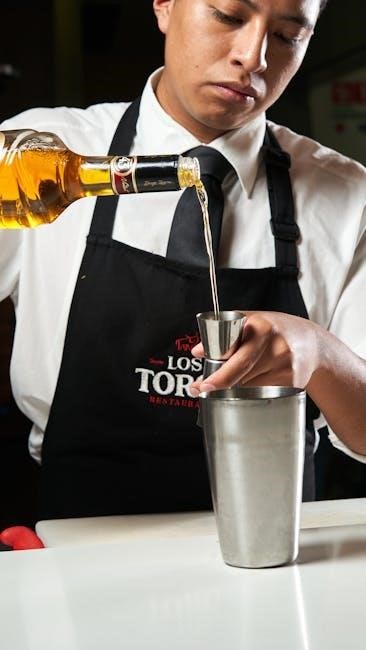
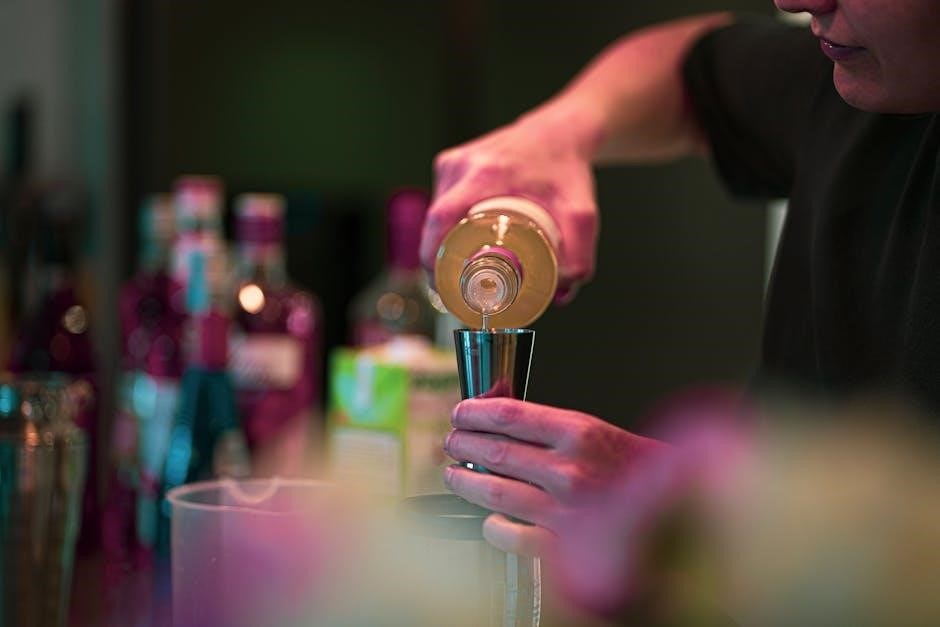
Jiggers are essential bar tools used for accurately measuring liquid ingredients, ensuring consistent cocktail recipes․ Understanding bartending terminology related to measurements – ounces, milliliters, dashes – is vital․ Many PDF guides, like comprehensive bartending manuals, detail jigger usage and standard pour sizes․
These hourglass-shaped tools typically feature two opposing wells of different volumes․ Precise measurement is paramount for balanced flavors and adherence to drink specifications․ Mastering jigger techniques, alongside understanding bartending terminology, elevates drink quality and professionalism․ Resources often highlight common jigger sizes and their corresponding measurements, readily available in downloadable PDF formats․
Shaker: Types and Uses
Cocktail shakers are fundamental for chilling, diluting, and blending ingredients․ Bartending terminology differentiates between Boston, Cobbler, and French shakers, each with unique features․ PDF resources, including bartending cheat sheets, illustrate proper shaking techniques and when to use each type․
Boston shakers utilize a mixing glass and tin, requiring skill․ Cobbler shakers are three-piece, beginner-friendly․ French shakers, or Parisian shakers, offer a sleek design․ Mastering these tools, alongside understanding bartending terminology, is crucial․ Downloadable PDF guides often detail shaking best practices for optimal texture and temperature․
Strainers: Hawthorne, Julep, and Fine Mesh
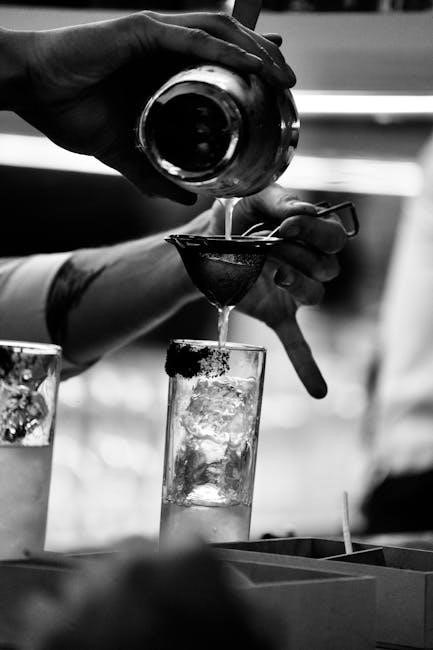
Cocktail strainers are essential for separating ice and solids from finished drinks․ Bartending terminology identifies three primary types: Hawthorne, Julep, and Fine Mesh․ PDF guides, like comprehensive bartending manuals, detail their specific applications․ Hawthorne strainers, with their spring, are versatile for most cocktails․
Julep strainers, spoon-shaped, excel with crushed ice․ Fine Mesh strainers remove even tiny particles, creating exceptionally smooth drinks․ Understanding these tools, alongside bartending terminology, is vital․ Many downloadable PDF cheat sheets visually demonstrate proper straining techniques for professional results․
Bar Spoon: Layering and Mixing
The bar spoon, a seemingly simple tool, is fundamental to bartending․ Its long handle facilitates stirring drinks directly within the glass, ensuring proper chilling and dilution․ Bartending terminology highlights its use in layering cocktails, carefully pouring liquids over the back of the spoon․
PDF resources, including bartending guides, often illustrate techniques for creating visually appealing layered drinks․ The twisted handle aids in lifting and spinning the spoon, enhancing mixing․ Mastering the bar spoon, as detailed in PDF cheat sheets, is key to crafting balanced and elegant cocktails․
Common Drink Orders & Calls
Understanding standard drink “calls” – like “on the rocks” or “neat” – is vital; bartending terminology PDF guides clarify these requests for efficient service․
“On the Rocks” ‒ Explained
“On the rocks” signifies a drink served over ice cubes․ This simple request is fundamental in bartending, and mastering its execution is paramount for any aspiring mixologist․ A bartending terminology PDF will consistently highlight this as a core phrase․ The amount of ice can vary based on the drink and bartender preference, but generally, it means filling the glass partially with ice before adding the beverage․
Understanding the impact of ice – dilution and temperature – is key․ Different ice types (cubed, crushed, etc․) also affect the drink’s experience․ Resources detailing bartending terminology often emphasize the importance of using quality ice for optimal results, ensuring a refreshing and enjoyable drink for the customer․
“Neat” ⎼ Understanding the Preference
When a patron requests a drink “neat,” they desire it served at room temperature, without ice or any mixers․ This showcases a preference for experiencing the spirit in its purest form․ A comprehensive bartending terminology PDF will invariably define “neat” as a standard order request․ It’s crucial to understand this isn’t simply about omitting ice; it’s about appreciating the spirit’s inherent flavors and aromas․
Serving a drink neat often implies using a specific glassware, typically a rocks glass, to allow for swirling and proper appreciation․ Recognizing this subtle nuance demonstrates professionalism and caters to the discerning drinker’s preference․
“Up” ‒ What Bartenders Need to Know
Ordering a cocktail “up” signifies the drink should be served chilled, without ice, in a stemmed glass – traditionally a martini or coupe glass․ A detailed bartending terminology PDF will emphasize this distinction․ This request necessitates careful shaking or stirring to achieve optimal chilling and dilution․
Bartenders must understand that “up” implies a refined presentation, requiring precise straining to avoid ice chips or pulp․ It’s a signal the guest appreciates a smooth, elegant cocktail experience, demanding attention to detail and proper technique․ Mastering this term is fundamental․
“With a Twist” ⎼ The Citrus Garnish
When a guest requests “with a twist,” they desire a citrus garnish – specifically, a slender strip of lemon, lime, or orange peel expressed over the drink and then dropped in․ A comprehensive bartending terminology PDF clarifies this nuance․ The “twist” isn’t merely decorative; expressing the oils releases aromatic compounds, enhancing the cocktail’s flavor profile․
Bartenders should skillfully create a neat twist, avoiding pith which imparts bitterness․ Understanding the appropriate citrus for each drink, as detailed in guides, is crucial for delivering a polished and flavorful experience․
Liquor Categories & Terminology
Liquor categories – spirits, liqueurs, fortified wines – form the foundation of cocktails; a bartending terminology PDF details each, aiding proper selection and mixing techniques․
Spirits: Base Liquors Explained
Spirits are the alcoholic foundation of most cocktails, categorized by production method and ingredients․ Understanding these distinctions is vital for any bartender․ A comprehensive bartending terminology PDF will detail common spirits like vodka – known for its neutrality – gin, flavored with botanicals, rum, derived from sugarcane, tequila and mezcal, originating from agave, and whiskey, aged in wooden barrels․
These PDF resources often explain the nuances of each spirit’s flavor profile, influencing cocktail creation․ Knowing the origin, production, and characteristics of each spirit allows for informed decisions when building balanced and flavorful drinks․ Mastering spirit knowledge is a cornerstone of professional bartending․
Liqueurs: Sweetening the Deal
Liqueurs add sweetness and complex flavors to cocktails, differentiating them from base spirits․ A detailed bartending terminology PDF will categorize liqueurs by their base spirit and flavoring agents – fruit, herbs, spices, or nuts․ Common examples include orange liqueurs like Cointreau and Grand Marnier, coffee liqueurs like Kahlúa, and crème de menthe․
These PDF guides often explain how liqueurs impact a cocktail’s balance and aroma․ Understanding the sugar content and flavor intensity of each liqueur is crucial for recipe development․ Liqueurs provide bartenders with a versatile palette for creating unique and delicious drinks․
Fortified Wines: Adding Depth
Fortified wines, like vermouth, sherry, and port, introduce unique complexity to cocktails․ A comprehensive bartending terminology PDF clarifies their production – spirits are added to increase alcohol content and flavor․ Dry vermouth is essential for martinis, while sweet vermouth features in Manhattans․
Sherry offers nutty and savory notes, and port provides rich, fruity sweetness․ These PDF resources detail how fortified wines influence a drink’s texture and overall profile․ Mastering their nuances elevates cocktail creation, adding depth beyond standard spirits and liqueurs․
Aperitifs & Digestifs: Before & After Dinner
Aperitifs and digestifs represent distinct beverage categories served relative to meals․ A detailed bartending terminology PDF explains aperitifs stimulate appetite – think vermouth or Campari – enjoyed before dining․ Conversely, digestifs, like amaro or brandy, aid digestion after a meal․
Understanding these terms, often found in PDF guides, is crucial for suggesting appropriate drinks․ These beverages aren’t merely alcoholic; they possess botanical complexities․ Knowing their roles enhances service, offering a complete and curated drinking experience, beyond simple cocktail mixing․
Mixing Techniques
Bartending terminology PDF resources detail essential techniques: stirring for clarity, shaking for chilling and dilution, layering for visual appeal, and blending for smoothness․
Stirring: For Clear Cocktails
Stirring, a fundamental bartending technique, is ideal for cocktails where clarity is desired, avoiding the cloudiness introduced by shaking․ PDF guides on bartending terminology emphasize using a bar spoon to gently combine ingredients with ice in a mixing glass․
This method minimizes dilution while chilling the drink, preserving the texture and flavor profile of spirit-forward cocktails like Manhattans or Martinis․ Proper stirring involves a smooth, circular motion, ensuring thorough chilling and integration of flavors․ Mastering this technique, as detailed in comprehensive bartending resources, is vital for crafting sophisticated, visually appealing drinks․
Shaking: For Chilled & Diluted Drinks
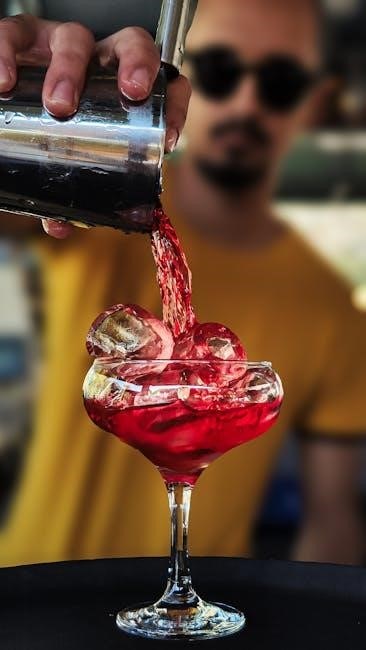
Shaking is a core bartending skill, employed to rapidly chill and dilute cocktails, creating a textured, often frothy, beverage․ Bartending terminology PDF resources highlight the importance of using a shaker – either Boston or Cobbler style – filled with ice․
This technique is best suited for drinks containing juices, syrups, or cream, as it thoroughly combines ingredients and creates a pleasing mouthfeel․ Proper shaking involves a firm, controlled motion, ensuring adequate chilling and dilution without overdoing it․ Mastering shaking, as detailed in guides, is essential for balanced and refreshing cocktails․
Layering: Creating Visual Appeal
Layering techniques elevate cocktail presentation, creating visually stunning drinks with distinct color separations․ Bartending terminology PDF guides emphasize the importance of density and careful pouring․ To achieve successful layers, ingredients must have differing sugar contents or densities; heavier liquids go below․
Bartenders often use the back of a spoon to gently pour the second liquid over the first, preventing mixing․ This method requires practice and understanding of ingredient properties․ Layered drinks offer a dramatic effect, enhancing the overall drinking experience and showcasing bartending skill․
Blending: Smooth and Consistent
Blending, a core bartending skill, achieves a homogenous mixture, crucial for frozen drinks and certain cocktails․ Bartending terminology PDF resources detail proper blender operation and ingredient ratios; Unlike shaking, blending utilizes ice to create a smooth, consistent texture, often resulting in a slushy or creamy consistency․
Bartenders must carefully monitor blending time to avoid over-processing, which can lead to a watery texture․ Proper blending requires understanding ingredient compatibility and achieving the desired viscosity․ This technique is essential for popular drinks like margaritas and daiquiris․

Glassware & Its Purpose
Bartending terminology PDF guides emphasize selecting appropriate glassware; each shape enhances specific drinks, impacting aroma, presentation, and the overall drinking experience․
Highball Glass: Versatile and Common
Bartending terminology PDF resources consistently highlight the highball glass as a foundational piece of barware due to its incredible versatility․ Typically holding 8-12 ounces, this tall, slender glass is ideal for drinks containing a significant amount of mixer, like gin and tonics or rum and colas․
Its straight sides allow for easy layering and visibility of the drink’s components․ Many PDF guides detail proper filling techniques, emphasizing leaving room for ice and garnish․ While seemingly simple, mastering the highball’s use is crucial for any aspiring bartender, demonstrating a fundamental understanding of drink construction and presentation․
Rocks Glass: For Neat Drinks & Cocktails
Bartending terminology PDF materials frequently showcase the rocks glass, also known as an old-fashioned glass, as essential for serving spirits “on the rocks” – over ice․ Holding roughly 6-12 ounces, its short, wide shape accommodates large ice cubes, minimizing dilution․
These guides also illustrate its use in classic cocktails like the Old Fashioned and Sazerac․ The glass’s sturdy build withstands muddling, a technique detailed in many PDFs, for releasing flavors from ingredients․ Understanding the rocks glass’s function signifies a grasp of both neat spirit service and foundational cocktail preparation․
Martini Glass: Classic Elegance
Bartending terminology PDF resources consistently feature the iconic martini glass, recognized for its distinctive conical shape and long stem․ Typically holding 4-6 ounces, it’s primarily used for serving – you guessed it – martinis, but also other elegant cocktails․
These guides emphasize its role in showcasing a drink’s clarity and color․ The stem prevents hand warming, maintaining the cocktail’s chilled temperature․ Mastering the martini glass’s presentation, as detailed in many PDFs, reflects a bartender’s attention to detail and understanding of classic cocktail culture․
Coupe Glass: A Stylish Alternative
Bartending terminology PDF guides increasingly highlight the coupe glass as a sophisticated alternative to the martini glass․ Originating in the late 19th century, its broad, shallow bowl and elegant stem offer a vintage aesthetic․
These resources detail its versatility, suitable for serving cocktails “up” – chilled without ice – like sidecars and daiquiris․ Unlike the martini glass, the coupe minimizes spillage․ PDFs often showcase its ability to enhance aroma appreciation․ Bartenders appreciate its classic charm and modern appeal, making it a stylish choice․

Garnishes & Their Role
Bartending terminology PDF resources emphasize garnishes’ importance, extending beyond aesthetics; they contribute aroma, flavor, and visual appeal to enhance the cocktail experience․
Citrus Wedges, Wheels & Twists
Bartending terminology PDF guides detail the nuanced uses of citrus garnishes․ Wedges, cut from a quarter or eighth of the fruit, are commonly used for muddling or squeezing directly into drinks, offering a rustic presentation․ Wheels, thin circular slices, float elegantly and impart a subtle aroma․
Twists, created with a channel knife, express essential oils over the drink, adding a fragrant zest․ Understanding these distinctions, as outlined in comprehensive bartending resources, elevates drink presentation and flavor profiles․ Proper technique ensures maximum oil expression and visual appeal, enhancing the overall cocktail experience․
Olives & Cherries: Classic Garnishes
Bartending terminology PDF resources consistently highlight olives and cherries as foundational garnishes․ Olives, typically green and often stuffed with pimentos, are synonymous with martinis, providing a salty counterpoint to the gin or vodka․ Maraschino cherries, vibrant and sweet, adorn Manhattans and Old Fashioneds, adding a pop of color and sugary flavor․
These classic pairings, detailed in bartending guides, aren’t merely decorative; they contribute to the drink’s overall balance․ Quality matters – brine-cured olives and premium cherries elevate the experience, demonstrating attention to detail and enhancing the cocktail’s appeal;
Herbs & Spices: Adding Aroma
Bartending terminology PDF guides emphasize the transformative power of herbs and spices․ Mint, basil, rosemary, and thyme are frequently muddled or slapped to release aromatic oils, enriching cocktails with fresh, vibrant notes․ Spices like cinnamon, nutmeg, and cloves introduce warmth and complexity, often rimming glasses or infused into syrups․
These additions, detailed in comprehensive bartending resources, aren’t just about flavor; they engage the sense of smell, enhancing the overall drinking experience․ Understanding proper techniques – like gentle muddling to avoid bitterness – is crucial, as outlined in professional bartending manuals․
Fruit Skewers: A Colorful Touch
Bartending terminology PDF resources highlight fruit skewers as a visually appealing garnish, elevating cocktail presentation․ Pineapple, cherries, strawberries, and orange slices are commonly used, adding a burst of color and a complementary flavor profile․ Skewers offer a convenient way for guests to enjoy a fruity bite alongside their drink․
Beyond aesthetics, bartending guides detail how fruit selection impacts the overall experience․ Proper preparation – ensuring fruit is fresh and appropriately sized – is key․ Mastering this simple technique, as detailed in professional bartending manuals, demonstrates attention to detail․

Advanced Bartending Terms
Bartending terminology PDF guides delve into techniques like muddling, rimming, and floating, essential for crafting complex cocktails and showcasing professional skill․
Muddling: Releasing Flavors
Muddling, a core bartending technique, involves gently crushing ingredients – typically fruits, herbs, or spices – to release their essential oils and aromas․ PDF guides dedicated to bartending terminology emphasize using a muddler with a flat or toothed end, applying pressure rather than grinding․
This process extracts maximum flavor for cocktails like Mojitos or Old Fashioneds․ Over-muddling can release bitter compounds, so a delicate touch is key․ Understanding proper muddling is vital, as detailed in comprehensive bartending resources, ensuring balanced and flavorful drinks․ Mastering this skill elevates cocktail creation significantly․
Rimming: Adding Flavor to the Glass
Rimming a glass involves moistening the rim with citrus juice or a simple syrup, then coating it with a flavorful substance like salt, sugar, or spices․ Bartending terminology PDF resources highlight this technique as a way to enhance both the aroma and taste of a cocktail․
It’s commonly used for Margaritas (salt) or Cosmopolitans (sugar)․ Proper execution ensures an even coating that complements the drink․ Guides emphasize avoiding excessive moisture to prevent a soggy rim․ Mastering rimming adds a professional touch and elevates the overall drinking experience․
Floating: Layering Liqueurs
Floating refers to the technique of gently pouring a higher-density liqueur over the top of a finished cocktail, creating a distinct, visually appealing layer․ Bartending terminology PDF guides explain that density differences are key to successful layering, preventing immediate mixing․
Typically, liqueurs with higher sugar content are denser․ This method adds a final burst of flavor and visual flair․ Careful pouring over the back of a spoon minimizes disturbance․ It’s a sophisticated presentation technique often used with brandies or crème de cacao, enhancing the drink’s aesthetic appeal․
Back-Bart: Storage and Organization
The back-bart is the area behind the bar, vital for efficient operation and inventory management․ Bartending terminology PDF resources emphasize its importance for storing spirits, liqueurs, and garnishes․ Proper organization minimizes wasted motion during service, crucial in busy environments․
It’s typically equipped with shelving, speed rails for frequently used bottles, and refrigeration․ Maintaining a clean and organized back-bart ensures quick access to necessary items․ Effective stock rotation (FIFO – First In, First Out) prevents spoilage and maintains product quality, as detailed in professional guides․

Resources for Further Learning (PDFs & Cheat Sheets)
Bartending terminology PDF guides, like “Bartending For Dummies”, and online cheat sheets offer comprehensive learning tools for mastering drink recipes and techniques․
Online Bartending Guides
Numerous websites provide extensive bartending terminology resources, often supplementing lessons with downloadable PDF materials․ These guides frequently cover call drinks, standard pours, and essential equipment knowledge․ Exploring platforms dedicated to mixology unlocks a wealth of information, from beginner-friendly overviews to advanced techniques․
Many sites offer interactive quizzes to test understanding of key terms, enhancing retention․ Searching for “Bartending For Dummies PDF” yields accessible learning materials․ Digital resources allow for flexible study schedules and convenient access to updated industry standards, ensuring bartenders remain current with evolving practices and terminology․
Printable Bartending Cheat Sheets
Printable bartending cheat sheets offer a quick reference for essential terminology and recipes, often available as PDF downloads․ These concise guides condense crucial information, like standard drink builds and common call orders, into easily digestible formats․ Resources like “Bartending For Dummies” frequently include supplementary printable materials․
Having a physical cheat sheet behind the bar streamlines service during busy periods, minimizing errors and maximizing efficiency․ They’re invaluable for new bartenders learning the ropes and seasoned professionals needing a quick refresher on less frequently used terms or recipes․
Bartending Certification Programs
Bartending certification programs comprehensively cover terminology alongside practical skills, often providing course materials in PDF format for study․ These programs, ranging from basic to advanced levels, ensure a standardized understanding of industry language and techniques․ They delve into spirit classifications, mixing methods, and responsible alcohol service․
Successful completion demonstrates commitment and competence to potential employers, enhancing job prospects․ Many programs incorporate detailed glossaries and reference guides, solidifying knowledge of essential bartending terminology․ Certification boosts confidence and professionalism behind the bar․
Recommended Bartending Books (PDF availability)
Several excellent books detail bartending terminology, with some offering PDF versions for convenient access․ “Bartending For Dummies” is a popular choice, providing a foundational understanding of drinks, tools, and techniques․ The “Professional Bartender’s Guide” offers in-depth knowledge, though PDF availability varies․
Exploring classic cocktail books also builds terminology familiarity․ Many online resources compile lists of recommended reads, often indicating PDF download options․ These resources are invaluable for aspiring bartenders seeking to master the language and art of mixology․
